CBSI Network
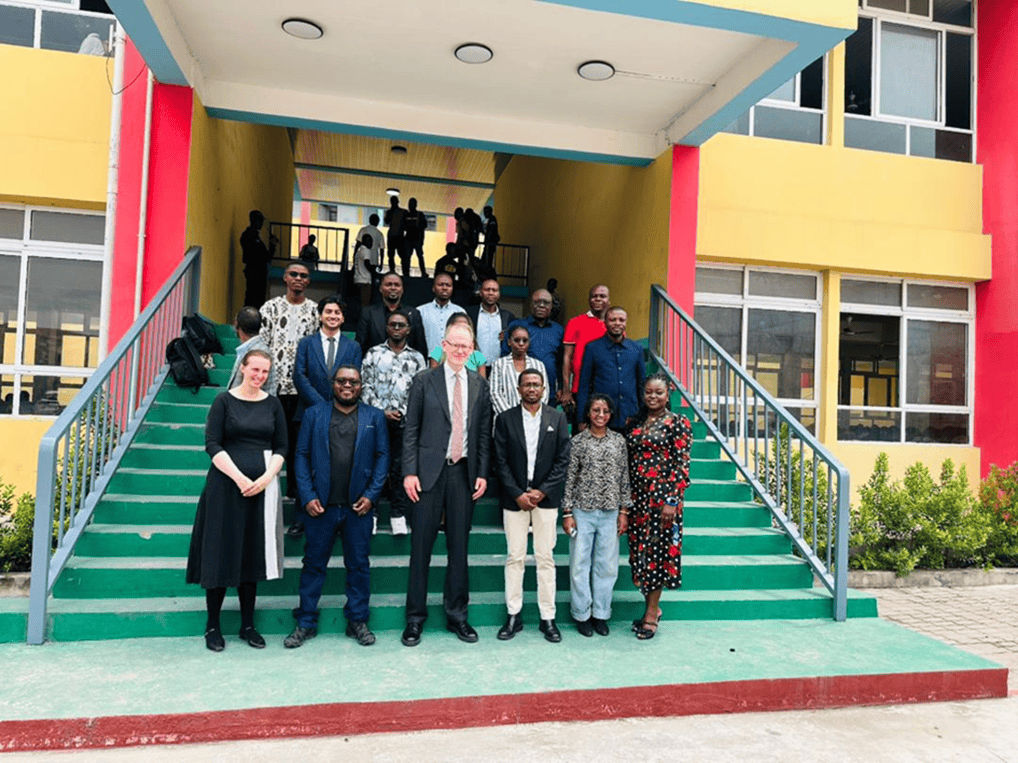
What happens when complex scientific research is presented in a way that a non-expert can understand? That question was answered convincingly during a gathering in London on 14 October 2026, where students, researchers, supervisors and partners from the Congo Basin Science Initiative (CBSI) came together to share and discuss their work. Hosted with support from Euan McCarthy (FCDO), the event brought together UK-based CBSI-CRAFT students, the CBSI Secretariat, supervisors, Maggie Charnley (Head of UK government’s International Forests Unit) and Dr Lera Miles (UNEP-WCMC), with a strong online presence from FCDO and CBSI members. The focus was not simply on presenting research findings, but on communicating science clearly to an audience that included policymakers and non-specialists. The students rose to the challenge. Rather than relying on highly technical language, they demonstrated how important scientific questions can be explained in accessible terms without losing their significance. The result was a series of engaging presentations that sparked lively discussion and showed how research can tell a story and inform real-world decision-making. Research Across the Congo Basin The presentations showcased the breadth of CBSI research, covering climate, hydrology, forests, biodiversity and socio-ecological systems across the Congo Basin. Understanding Climate and Rainfall Paul Mbock, a PhD student at the University of Oxford’s Climate Observatory, presented his work on convection over the Congo Basin. His research aims to improve understanding of the atmospheric processes that drive rainfall, helping scientists to predict weather patterns more accurately, anticipate hazards and support climate risk management. Monitoring Water Movement Within the Hydrology Observatory, Génie Lutonadio Kiala, a PhD student at the University of Leeds, presented research on water flux dynamics between the Congo River’s main channel and the Cuvette Centrale wetlands. Understanding how water moves through these systems is essential for assessing wetland health, managing flood risks and supporting informed conservation decisions. Forests and Carbon Storage Crispin Musambayi Biayi, a PhD student at the University of Leeds, explored a crucial question: what determines the ability of Central African forests to continue absorbing carbon? By identifying areas where carbon sinks are likely to remain stable and resilient, the research can help prioritise effective forest conservation strategies. Mapping Biodiversity Vainqueur Bulambo, a PhD student at the University of Stirling, examined the factors shaping biodiversity patterns across the Congo Basin. The long-term objective of this work is to identify priority areas for conservation and improve understanding of how biodiversity is changing across the region. The Climate Impact of Deforestation David Chishugi, from the University of Leeds, presented research assessing the regional climate impacts of deforestation and forest degradation. By improving climate models, his work seeks to strengthen predictions of how land-use change affects regional weather systems and to provide better evidence for policy development. Communities, Conservation and Local Knowledge Several presentations highlighted the human dimension of conservation, demonstrating the importance of understanding local perspectives and experiences. Traditional Beliefs and Conservation Charles Prince Assam, a Master’s student at UCL, explored how local belief systems contribute to conservation-friendly behaviour around Lobéké National Park in southeastern Cameroon. His research investigates how Baka and Bangando communities use totems, taboos and moral responsibilities to shape their relationships with wildlife. It also examines how these traditional systems interact with formal conservation approaches. The findings suggest that recognising local values could support more participatory and culturally grounded conservation efforts. Key recommendations included: Who Pays for Forest Elephant Conservation? Mohamed Mounir, also a Master’s student at UCL, addressed a challenging issue: the costs of living alongside forest elephants. As land-use change reduces elephant habitat, animals are increasingly moving into villages, causing significant crop damage. While local communities generally do not hold negative attitudes towards elephants themselves, frustration is often directed towards authorities because compensation and mitigation mechanisms are largely absent. Discussions highlighted several potential solutions, including improved wildlife corridors and habitat connectivity. Experiences from elsewhere in the region suggest that fencing can also be effective in certain circumstances. Community-based monitoring and stronger engagement with local government may help create more sustainable approaches to managing human-elephant interactions. Well-being, Conservation and Indigenous Communities Yves Londza, a Master’s student at UCL, presented research on how different communities living near Nouabalé-Ndoki National Park understand wellbeing. The study examined the perspectives of Bantu farmers, Indigenous Mbenjele hunter-gatherers and immigrant communities. While livelihoods and expectations differed considerably between groups, attitudes towards the national park were overwhelmingly positive. However, the research also documented continuing discrimination and economic exploitation experienced by Indigenous Peoples. Discussion focused on the need for stronger implementation of existing laws, greater government engagement and increased involvement of human rights organisations in supporting Indigenous rights and inclusion. Maximising Policy Impact The afternoon session turned attention towards the practical question of how research can influence policy. Dr Lera Miles of UNEP-WCMC delivered a detailed session on maximising the policy impact of research, providing students with guidance on translating scientific evidence into meaningful action. This was followed by an insightful presentation from Professor Suspense Averti Ifo of Marien Ngouabi University, who shared the story of how scientific research on Congo Basin peatlands helped shape national policy in the Republic of Congo. The discovery and documentation of the Congo Basin peatlands transformed understanding of their global climate importance. Before the publication of the first major peatland research paper in 2017, the term “peatland” was rarely used in national discussions in the Republic of Congo. Over time, however, scientific evidence helped elevate the issue onto the political agenda, with even the country’s president referring to peatlands in public speeches. The impact extended beyond awareness. In 2023, changes in legislation reflected this growing understanding, and the scientific definition developed through the CongoPeat project informed the new legal framework for peatland management . By 2025, the legal framework had been formally validated and broadened to ensure that all peatland types in the country were recognised. Professor Ifo also reflected on the challenges encountered during the policy process. Developing new legislation highlighted coordination barriers between different ministries and demonstrated the importance of sustained dialogue between government institutions, researchers and other stakeholders. He ...