On 1 November 2025, Jules Trevor Kegni Makalla and Steve Perrin Nandjou Mongou embarked on the Research Master’s in Agroforestry and Forest Ecosystem Management at the University of Dschang, Faculty of Agronomy and Agricultural Sciences, Department of Forestry, Cameroon. Supported through the CRAFT Project funded by UK International Development, both students successfully completed their research projects, contributing valuable knowledge to the sustainable management of agroforestry systems in Cameroon.
Jules’ research, Farmer Management of Agroforests Cocoa and Coffee Systems in Cameroon: Contribution of Woody Species to the Income of Farmers in the Noun and Lekié Departments, assessed the financial contribution of woody species in cocoa and coffee agroforestry systems to farmers’ incomes in Cameroon. Against the backdrop of the EU Deforestation Regulation (EUDR), which requires commodities such as cocoa and coffee to be produced without deforestation, the study demonstrated the economic value of maintaining and managing trees within agroforestry systems, highlighting their importance for both farmer livelihoods and future market access.
Steve’s study, Vegetation Structure and Productivity in Coffee Agroforestry Systems in the Production Basins of the Littoral and Western Regions of Cameroon, examined Robusta coffee agroforestry systems in the Noun and Moungo regions of Cameroon, focusing on how the diversity and structure of trees and other associated vegetation affect soil fertility, coffee productivity, and carbon storage. The study aimed to identify management practices that can sustain coffee production while preserving important ecological benefits such as biodiversity conservation and carbon sequestration. Their achievements mark an important milestone in both their academic careers and the advancement of agroforestry research in Cameroon.
In this interview, they share their experiences throughout the Research Master’s programme, discuss the key findings and impact of their research projects, and reflect on their future aspirations and career plans in agroforestry and sustainable land management.
Why did you apply for this Master’s programme and research project and what were your expectations?
Jules: After working for two years in northern Cameroon on the ReSI-Noc Project implemented by Landscape Alliance (CIFOR and ICRAF), I felt that, at the end of the project, it was time to return to my studies and further strengthen my knowledge. Working within an agroforestry research institute had sparked my passion for research after completing my degree in Agricultural Engineering and helped me appreciate the importance of actions aimed at protecting our environment. With this in mind, when I came across the CBSI scholarship opportunity, it appeared to be the ideal stepping stone to enhance my skills and contribute to environmental conservation through impactful research.
At the beginning of this journey, I hoped to become part of a community and pursue my studies in an environment that values researchers and supports the personal and scientific development of young scholars. These expectations were largely fulfilled. Through CBSI, particularly during the 2026 annual conference, I had the opportunity to meet distinguished researchers from across the Congo Basin, build connections with a new generation of young scientists, and engage in discussions on topics I am passionate about in an environment that encourages open thinking and intellectual exchange.
In addition, the CRAFT project provided outstanding technical and financial support throughout my studies. This assistance greatly facilitated my research activities and played a key role in enabling me to successfully complete my degree.
Steve: As an Agricultural Engineer, I chose this Research Master’s programme in Agroforestry and Forestry because I wanted to deepen my knowledge of the sustainable management of natural resources and gain a better understanding of the interactions between agricultural and forest systems and the environment.
Before starting my Master’s degree, I wanted to strengthen my scientific knowledge, improve my research skills, and gain more experience in agroforestry and forestry fieldwork, as well as in data analysis. These expectations were largely met, as the programme provided valuable opportunities to develop both my technical expertise and practical research experience.
Can you briefly explain your thesis topic to a non-specialist audience?
Jules: My research thesis focused on assessing the financial contribution of woody species to farmers’ incomes in cocoa and coffee production systems. In simple terms, both in Cameroon and across other cocoa- and coffee-producing countries, the European Union has introduced the EU Deforestation Regulation (EUDR), which governs the access of products such as cocoa and coffee to the European market. The regulation requires that these commodities be produced in deforestation-free systems in order to be exported in the future. Although the regulation was adopted on 30 December 2020 and was initially scheduled to come into force on 30 December 2025, its implementation is still under discussion and is expected to take effect in the coming months.
In Cameroon, cocoa and coffee are predominantly cultivated within agroforestry systems, which gives producers a potential advantage in meeting EUDR requirements. However, an important question remains: what direct benefits do farmers obtain from the trees that they are encouraged to retain within their plantations? My study therefore sought to evaluate the contribution of these associated trees to farmers’ overall income. The aim was to demonstrate the economic importance of maintaining agroforestry systems and to provide insights on how they can be managed and optimised to maximise both financial returns and environmental benefits.
Steve: My thesis focused on Robusta coffee-based agroforestry systems, in which coffee is cultivated alongside other trees, such as fruit trees, shade trees, and leguminous species, rather than in monoculture. I compared these systems in two regions of Cameroon, Noun (West Region) and Moungo (Littoral Region), to understand how the diversity and structure of associated vegetation influence soil fertility, coffee productivity, and carbon storage.
In simple terms, I sought to understand how the trees and other plants growing around coffee plants are organised, how this vegetation changes as plantations age, and how these factors relate to coffee production. The overall objective was to identify management practices that can sustain high coffee yields while preserving the ecological benefits provided by trees, particularly biodiversity conservation and carbon sequestration.
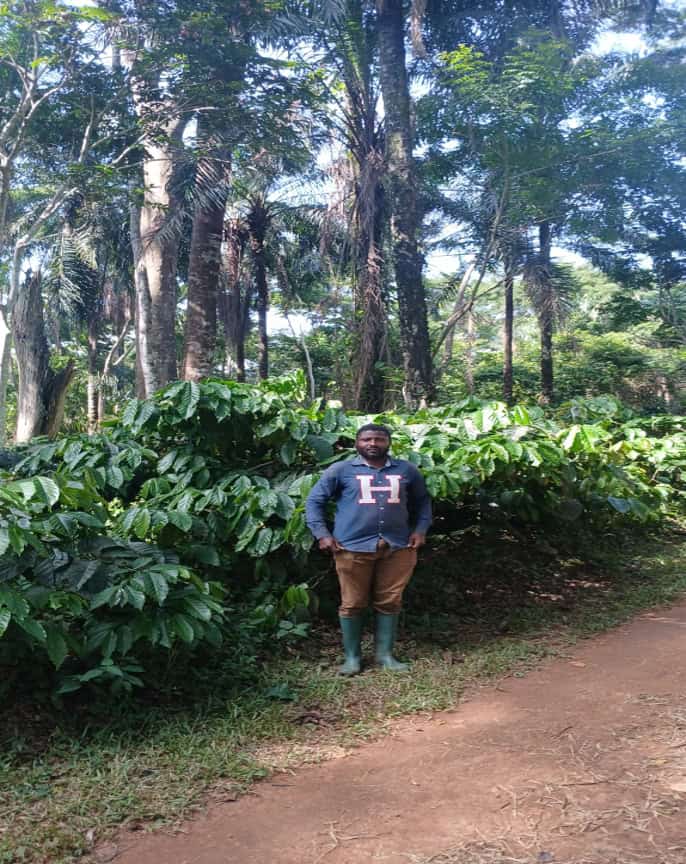
How did you collect your data? Tell us about your fieldwork experience.
Jules: Because my research focused on two crops, I conducted fieldwork in two major production basins: Noun for coffee and Lekié for cocoa. Within the MSc programme at the University of Dschang, students are given approximately one to one and a half months to complete data collection. As a result, I had to be highly organized, creative, and disciplined to complete the fieldwork and prepare my thesis for defense within the allotted timeframe.
To achieve my research objectives, I carried out floristic inventories in cocoa and coffee agroforestry plots and conducted individual interviews with approximately 400 farmers to build a robust dataset. The financial support provided through CBSI and the technical guidance of my supervisor were instrumental in this process. Through valuable contacts, I was able to mobilize two field teams that worked simultaneously in the two study areas, enabling efficient data collection and timely completion of the fieldwork.
I trained the enumerators and clearly assigned roles and responsibilities to ensure the teams could operate effectively in parallel. I regularly travelled between the two sites to monitor progress, and each evening we held debriefing sessions to review the day’s activities, identify challenges, and plan improvements for the following day. This experience greatly strengthened my organizational and leadership skills. I was also deeply impressed by the cooperation of the farmers, who willingly contributed their time and knowledge without expecting compensation, which significantly facilitated the research process.
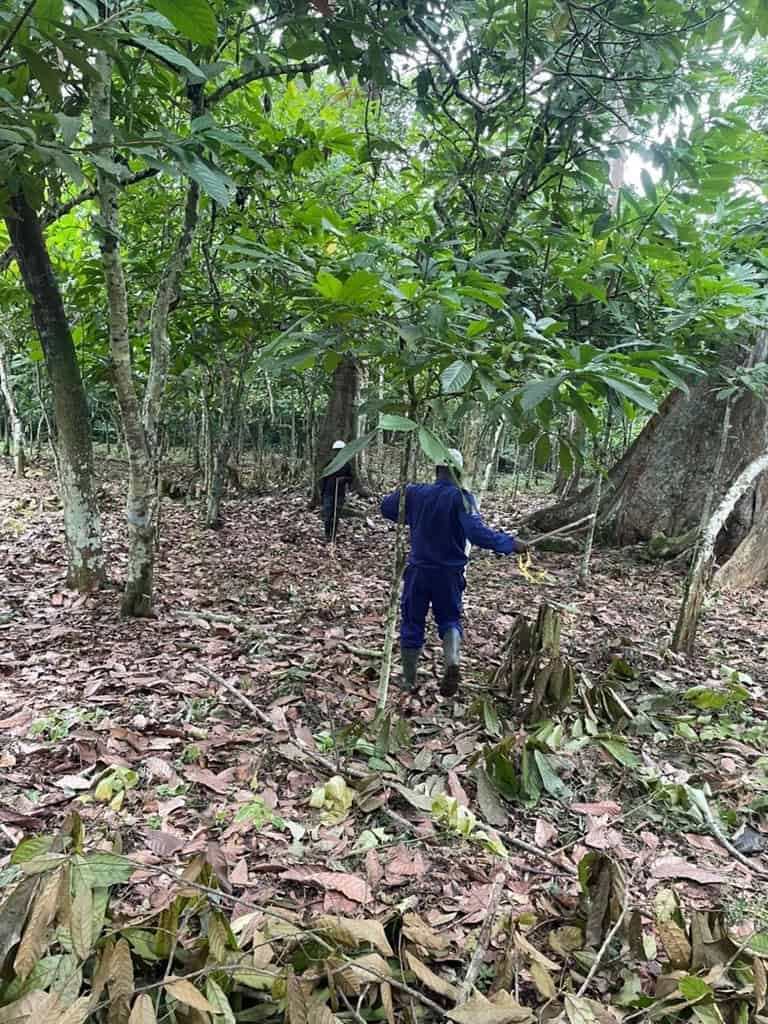
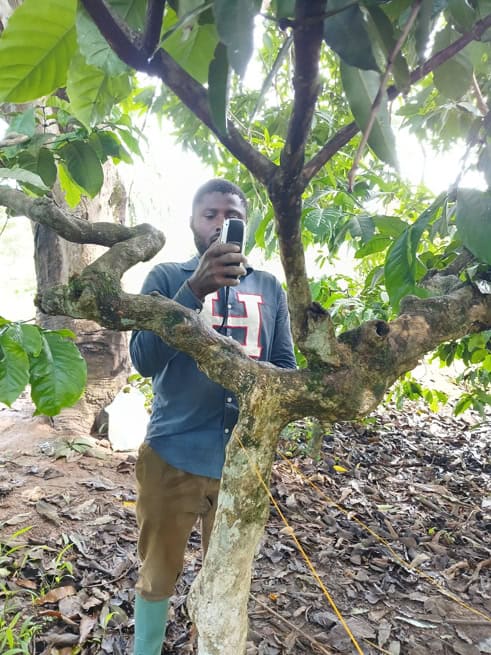
Steve: Data were collected through field surveys involving 100 farmers and from 36 agroforestry plots located in the two study areas. The research included floristic inventories (following Harial et al., 2011) and assessments of vegetation structure, including the calculation of Shannon-Weaver, Simpson, and Pielou diversity indices, as well as the Importance Value Index (IVI/FIV). Soil samples were collected at depths of 0-15 cm and 15-30 cm for physicochemical analyses, while dendrometric measurements were carried out to estimate biomass and carbon stocks using the allometric equations of Chave et al. (2005). Coffee productivity was also monitored throughout the study.
Fieldwork required extensive travel using both vehicles and motorcycles to access the study sites. This experience was highly rewarding but also demanding, teaching me the importance of rigor in data collection, effective work organisation, and building strong relationships with farmers.
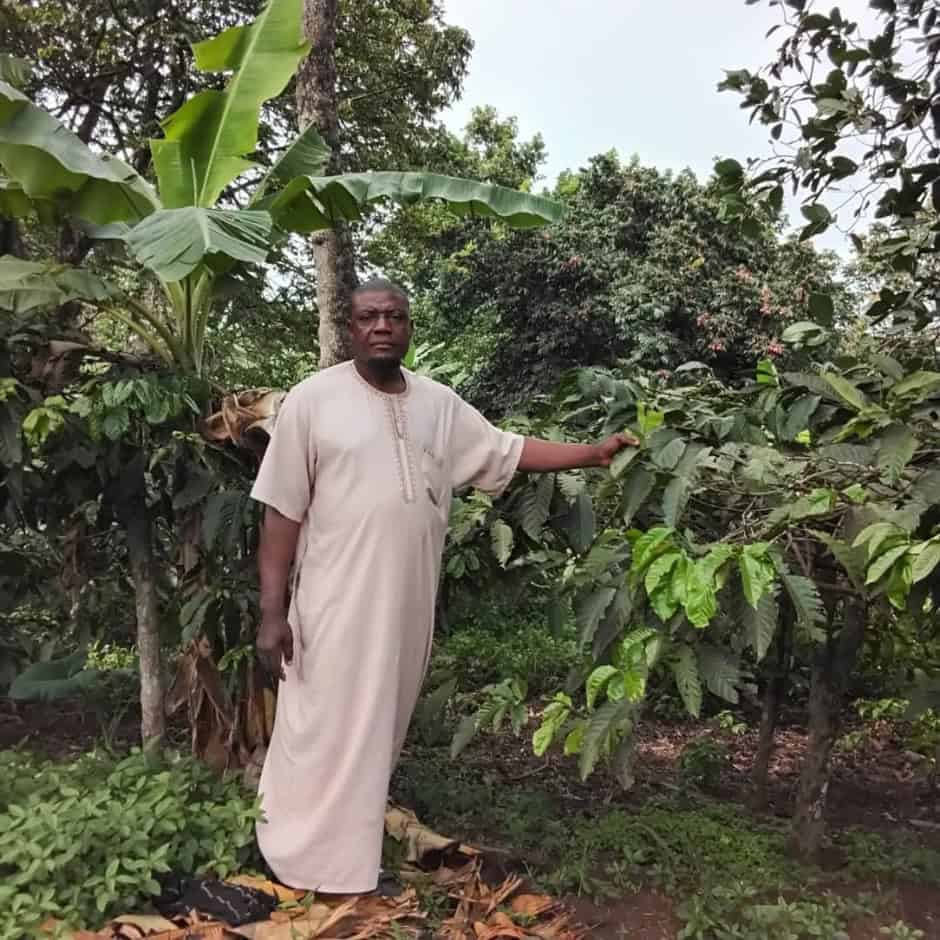
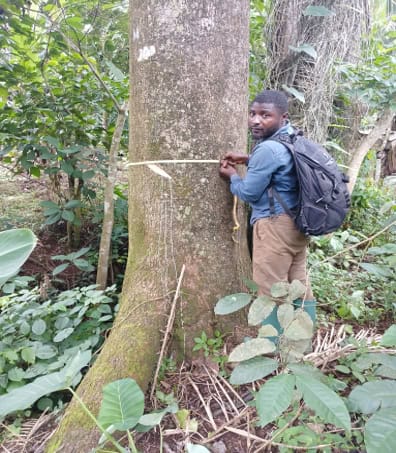
© Steve Perrin Nandjou Mongou
What were the main findings of your thesis?
Jules: In terms of floristic composition, the results confirm the existence of two agroforestry systems based on fundamentally different approaches. The Lékié area is characterised by a complex, forest-like agroforest (36 species, H’ = 3.03), inherited from the natural dynamics of dense humid forests and passively enriched through natural regeneration. In contrast, the Noun area features an intentionally established agroforestry system (18 species, H’ = 2.32), dominated by cultivated species with direct food and commercial uses.
Regarding management practices, the study identified a diversity of agroforestry trajectories reflected in three distinct clusters: traditional extensive coffee farmers (Cluster 1, Noun), market-oriented semi-intensive cocoa farmers (Cluster 2, Lékié), and intensive specialised coffee farmers with high productivity but negative net returns (Cluster 3, Noun). This diversity demonstrates that Cameroon’s cocoa and coffee agroforestry systems do not represent a single homogeneous model but rather different adaptation strategies shaped by local conditions.
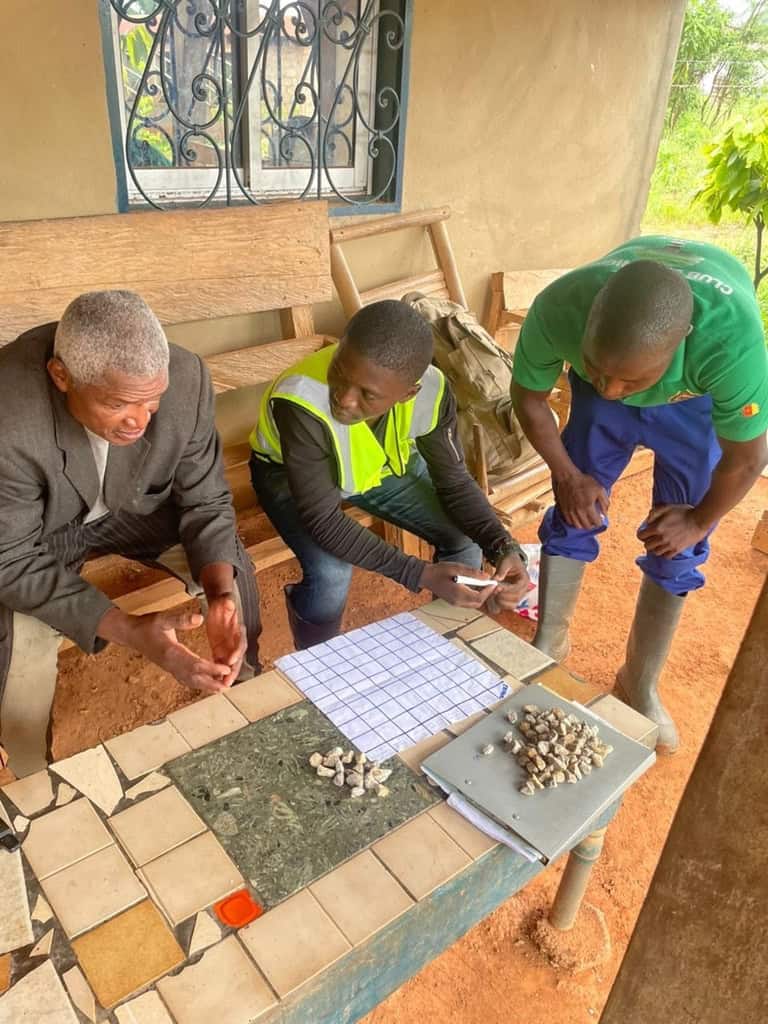
With respect to use values and economic contribution, woody species play multiple important roles, as confirmed by the pebble distribution method, including household food provision, commercialisation of non-timber forest products (NTFPs), shade regulation, soil fertility improvement, and traditional medicine. The contribution of NTFPs to agricultural income was highest in Cluster 1 (21.7%), where they served as a source of income diversification, and acted as a significant economic buffer in Cluster 3, compensating for 75% of the current deficit. These findings confirm the economic value of maintaining a diverse range of woody species within agroforestry systems.
Concerning performance factors, the Probit analysis revealed that membership in a farmers’ organisation or cooperative was the most significant determinant of economic performance (AME = +20.3%), ahead of agroforest size and market access. However, the importance of these determinants varied across the different clusters, highlighting the need for differentiated and context-specific interventions to improve farmers’ incomes. The negative effect of agricultural extension services on economic performance further suggests that standardised extension messages are often poorly adapted to the complexity of agroforestry systems.
Steve: The study confirmed that the diversity and structure of vegetation in coffee agroforestry systems significantly influence soil fertility, coffee productivity, and carbon storage. It also revealed that different ecological dynamics are at play in the Moungo and Noun regions, highlighting the importance of site-specific management practices to improve both production and environmental sustainability.
What do these findings mean for the general public, policymakers, or the scientific community?
Jules: For the general public, these findings demonstrate that in cocoa and coffee agroforestry systems, associated trees play a significant role in farmers’ livelihoods by providing goods and services that, once utilised or marketed, strengthen their financial resilience. The study even revealed that, for some farmers, the benefits derived from these associated trees helped offset losses incurred during coffee production seasons. These results highlight the importance of integrating high-value tree species into agroforestry systems and ensuring their proper management to maximise the economic returns from farming operations.
For policymakers, the study demonstrates the strong potential of cocoa and coffee agroforestry systems to adapt to the requirements of the EU Deforestation Regulation (EUDR). It also identifies targeted areas for intervention to improve farmers’ economic performance according to their specific agroforestry management strategies. Through the economic analysis and the application of the Probit model, the study was able to estimate the positive or negative economic impact of different support measures for farmers belonging to each management typology. These findings provide valuable guidance for government extension services and non-governmental organisations, enabling them to allocate resources more efficiently and deliver more tailored support to producers. The results also underscore the need for greater investment in the coffee sector to increase production potential and take advantage of new opportunities arising from EUDR compliance.
The Congo Basin is the world’s second-largest carbon sink, and its preservation is a collective responsibility. Achieving this requires a deeper understanding of our ecosystems and the measures needed to protect them. Through this study, I sought to demonstrate that producing cocoa and coffee within agroforestry systems is not a constraint on farmers’ economic productivity, but rather a valuable financial opportunity through income diversification.
For the scientific community, this research offers a fresh perspective by applying a systemic approach to the evaluation of agroforestry systems. Previous studies often focused separately on floristic composition, management practices, or economic performance, but rarely examined these systems holistically by exploring the causal relationships between species composition, farmers’ management decisions, and the economic contribution of woody species to household income. This integrated approach provides a deeper understanding of agroforestry systems and the economic and ecological consequences of farmers’ management choices. In addition, the study contributes important new knowledge on coffee-based agroforestry systems, which have historically received less scientific attention than cocoa-based agroforestry systems.
Steve: For farmers, the findings highlight the benefits of diversifying the tree species associated with coffee plantations to improve soil fertility and sustain production, rather than focusing solely on increasing shade cover.
Agroforestry systems demonstrate that it is possible to combine agricultural production, biodiversity conservation, carbon sequestration, and the improvement of local livelihoods within the same landscape.
For policymakers, the study provides evidence that coffee agroforestry is a climate-smart agricultural practice that can contribute to rural development and climate change mitigation, while for researchers, it offers valuable baseline data on carbon storage and biodiversity in contrasting agroecological regions of Cameroon.
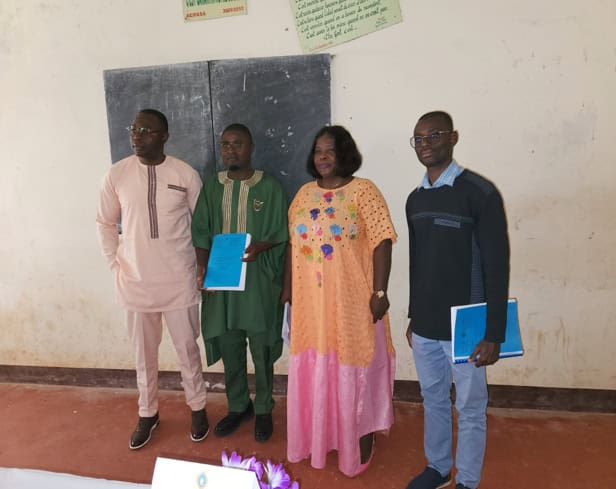
In one sentence, how would you describe your CBSI Master’s journey?
“Inspiring! I gained a great deal both scientifically and personally.” (Jules Trevor)
“A transformative experience in learning, research, and personal development.” (Steve)
Looking Ahead
Having successfully completed their Research Master’s in Agroforestry and Forest Ecosystem Management, both Jules Trevor Kegni Makalla and Steve Perrin Nandjou Mongou are determined to build on the knowledge and experience gained through their studies and the support of the CBSI bursary and CRAFT project.
For Jules, the immediate priority is to publish the findings of his research in a scientific journal and continue contributing to evidence-based solutions for sustainable agriculture. He hopes to pursue a PhD focused on agroforestry systems and their role in improving farmer resilience, while also seeking opportunities within research institutions where he can further develop his passion for scientific inquiry. Looking ahead, he aims to conduct impactful research, publish scientific articles, and produce policy briefs that help bridge the gap between research and decision-making. By continuing to engage with rural communities, he hopes to ensure that scientific knowledge translates into tangible benefits for farmers and agricultural development in Cameroon.
Steve likewise intends to continue developing his expertise in agroforestry and sustainable forest ecosystem management. He plans to pursue doctoral studies and gain additional professional experience that will allow him to connect scientific research with the realities faced by farming communities. His ambition is not only to generate valuable scientific knowledge but also to promote its practical application in support of more sustainable and climate-resilient agricultural systems. Through his future work, he hopes to help producers and local communities adopt practices that strengthen both livelihoods and environmental sustainability.
Together, their journeys reflect the broader vision of the Congo Basin Science Initiative (CBSI): Training a new generation of expert scientists equipped to advocate for evidence-led policy in the Congo Basin region. As they take the next steps in their careers, both graduates are committed to advancing research, supporting sustainable land-use practices, and contributing to a more resilient future for their communities and their country.
If you want to learn more about the students’ projects, please visit their profile pages:
Steve Perrin Nandjou Mongou | Congo Basin Science Initiative
Jules Trevor Makalla Kengni | Congo Basin Science Initiative