Brazzaville, Republic of Congo — January 2026.
At the beginning of this year, hundreds of scientists from across the Congo Basin and around the world gathered in Brazzaville for a landmark event: the first Congo Basin Science Initiative (CBSI) conference, held from January 7–9 at the Hôtel Saint François de Paule. The gathering marked a major turning point for scientific collaboration and leadership of researchers from one of the world’s most critical ecological regions, the Congo Basin.
A Science Movement Years in the Making
CBSI was launched in October 2023 during the Summit of the Three Basins in Brazzaville, Republic of Congo. The initiative introduced its Scientific Steering Committee and a collectively-produced Science and Capacity Building Plan. This launch was made possible thanks to seed funding from the Montpelier Foundation, the University of Leeds, the Wildlife Conservation Society, One Forest Vision, and the United Nations Sustainable Development Solutions Network.
Since then, CBSI has gained major momentum. In 2024, the UK Government announced a £9.1 million (US $12 million) investment through its Congo Basin Forest Action programme. The UK-funded CRAFT–Sustainable Development project supports funds twelve cutting edge research groups across the region, 33 postgraduate scholarships, and 25 new scientific investigation areas—along with the CBSI’s annual conference, now off to a dynamic start.
A Full House and a Historic Milestone
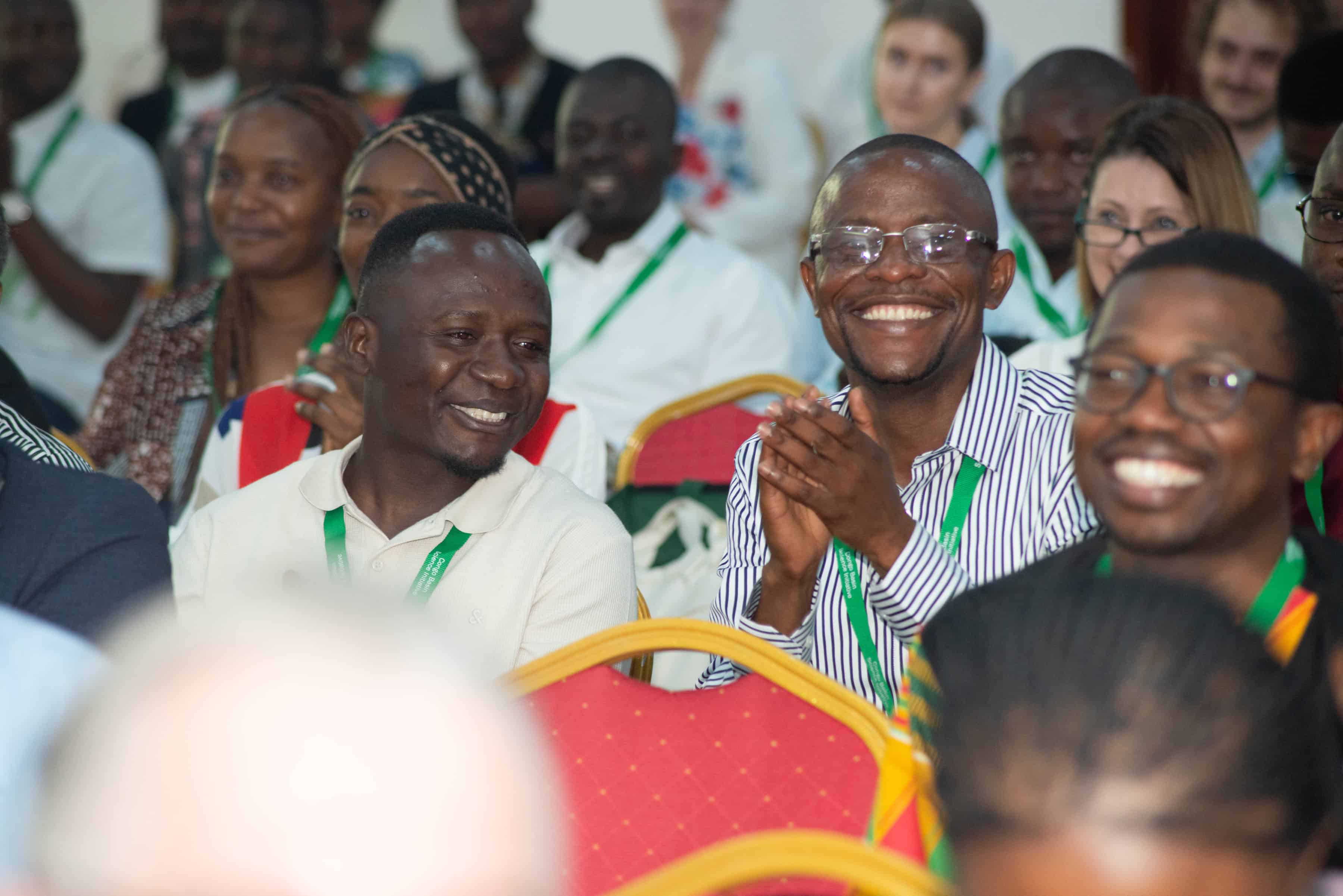
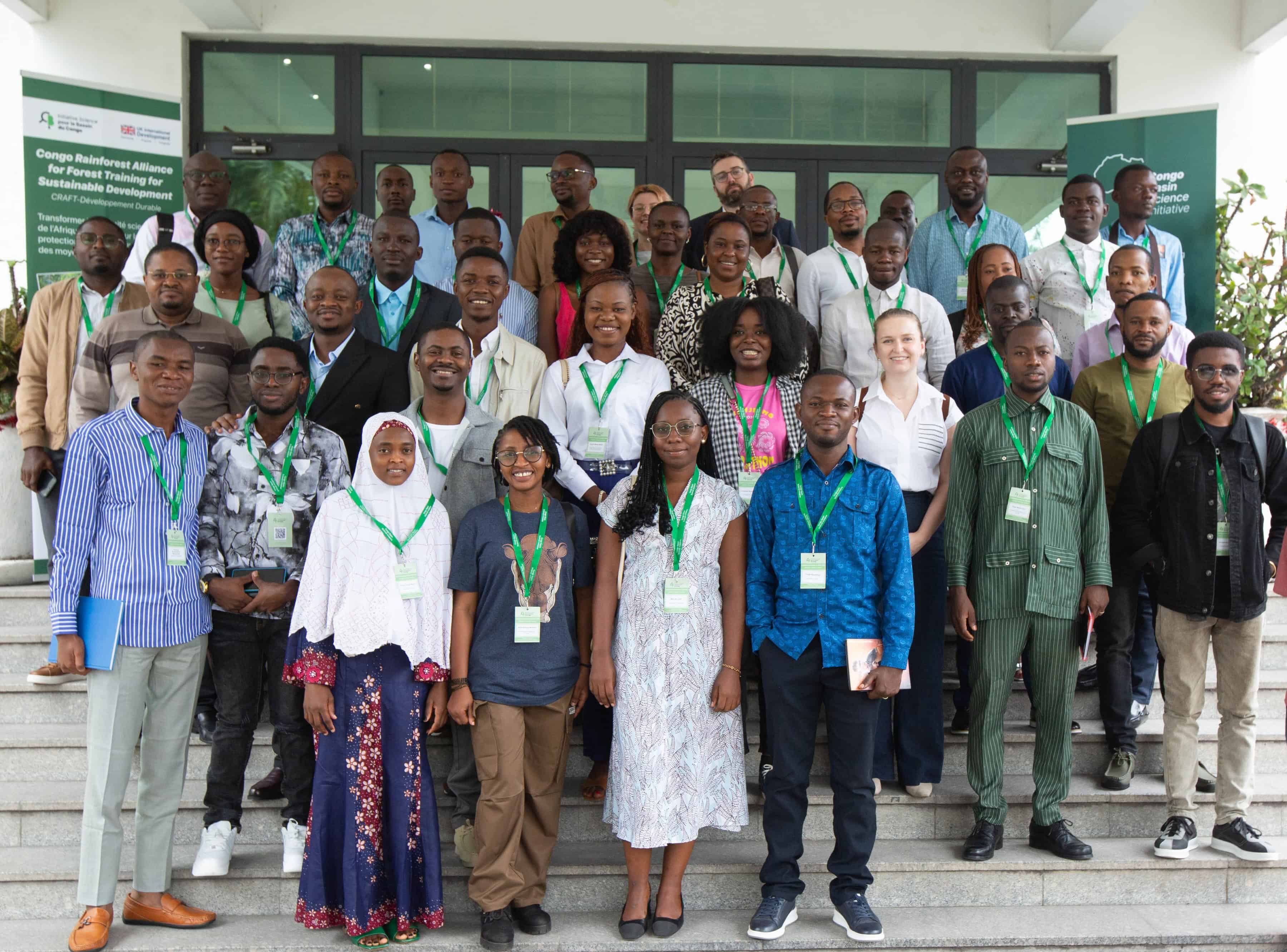
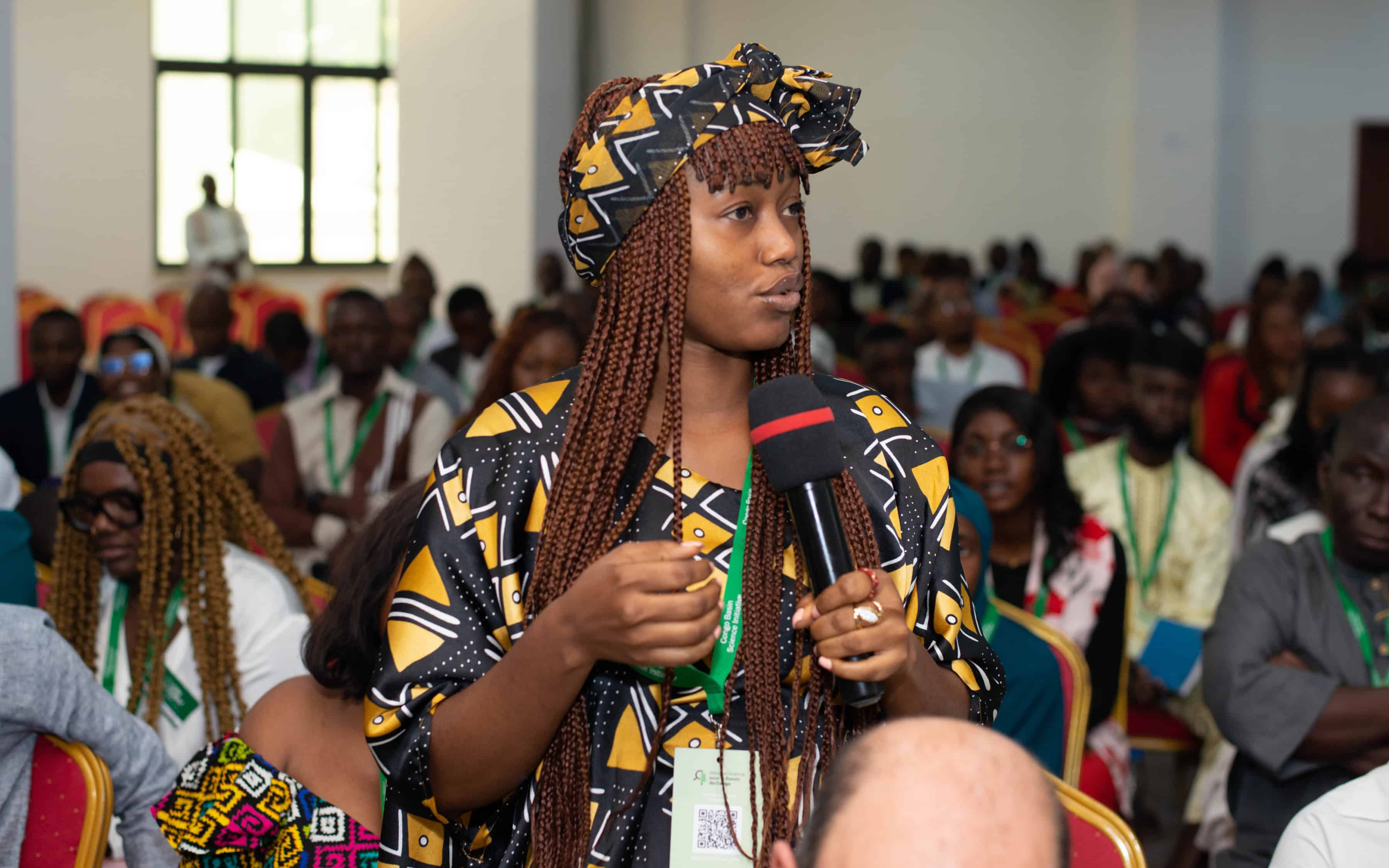
Interest in the first CBSI conference exceeded all expectations, with the conference being sold out. The conference, held in Brazzaville, Republic of the Congo, saw over 250 participants arrived from 10 countries, including the Republic of Congo, Democratic Republic of Congo, Cameroon, Gabon, Equatorial Guinea, and the Central African Republic, along with participants from Europe and North America.
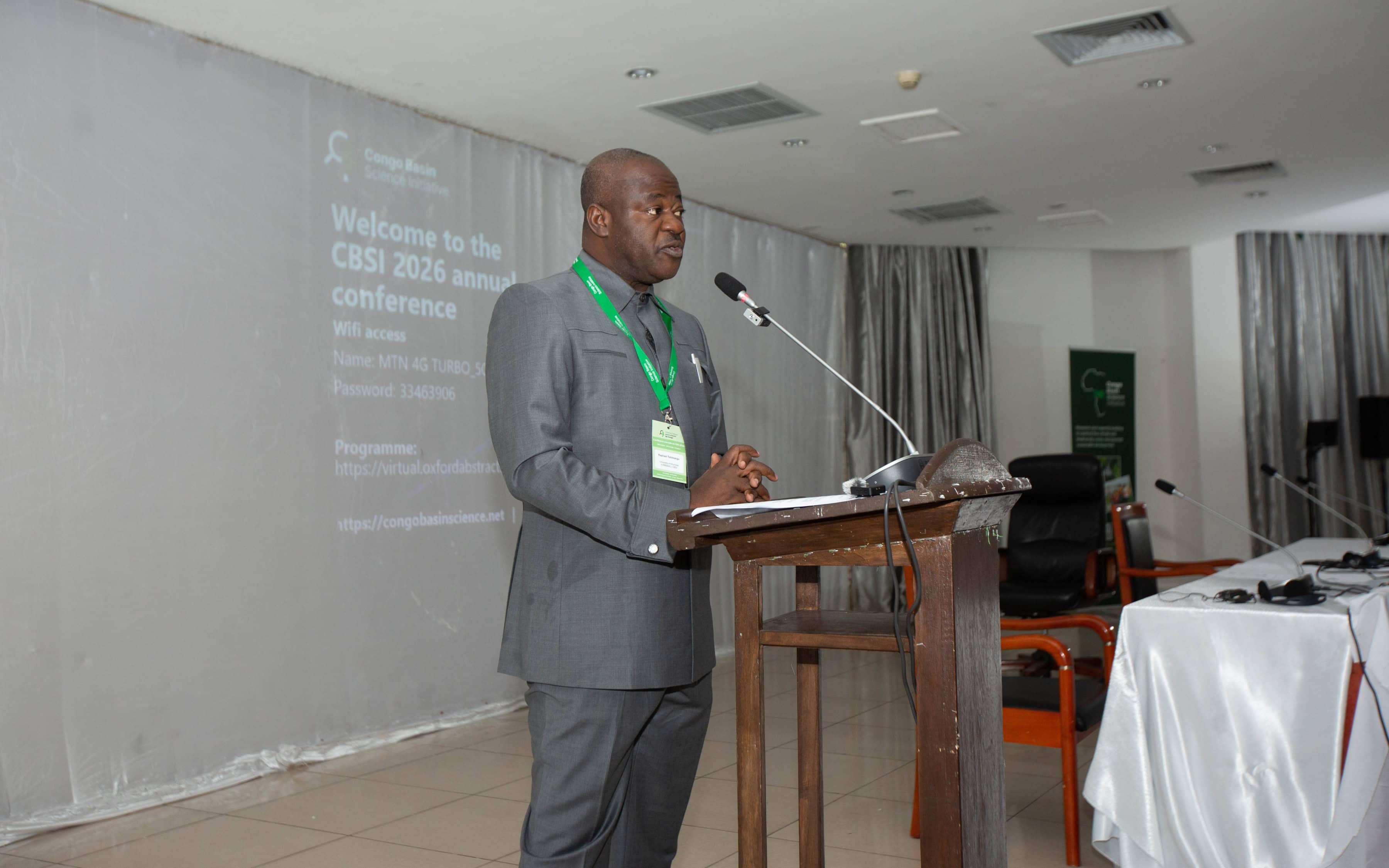
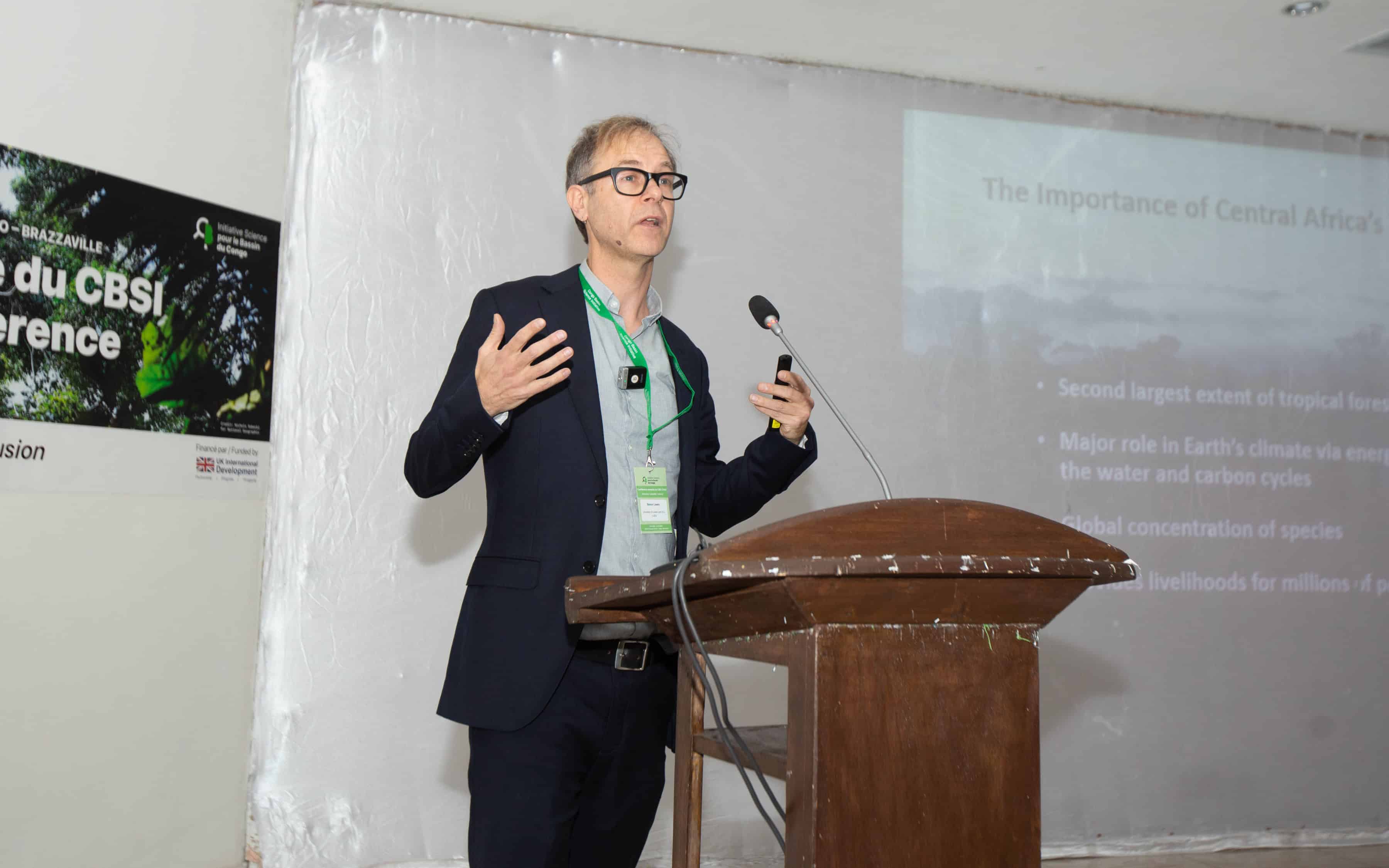
The event opened with remarks from senior scientific leaders, including
- Prof. Rufin‑Willy Mantsie (Secretary General, Marien Ngouabi University),
- Prof. Raphael Tshimanga (CBSI Co‑Chair, University of Kinshasa), and
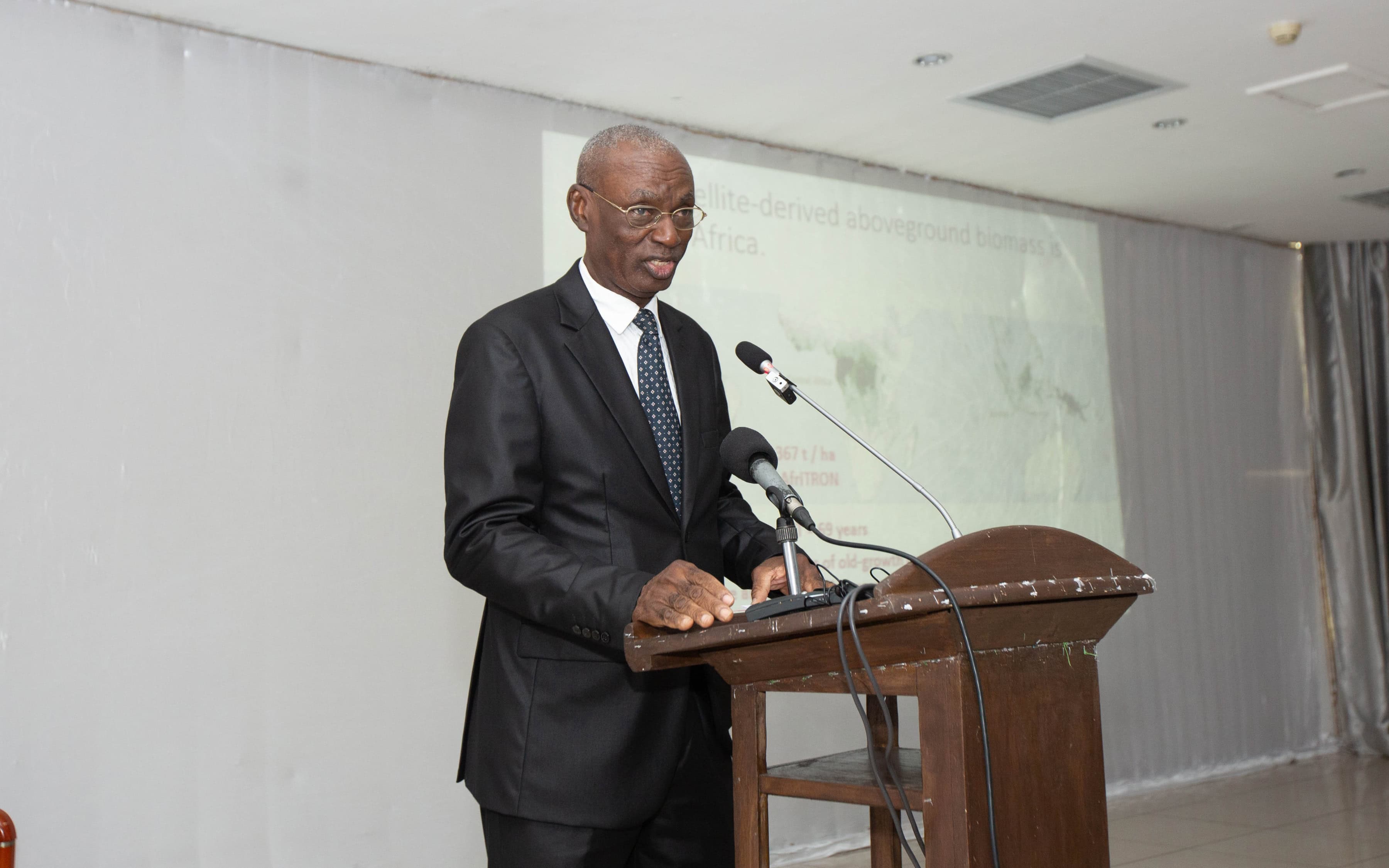
- Prof. Simon Lewis (CBSI Co‑Chair, University of Leeds and UCL), who also delivered the keynote lecture.
Their message was clear: The Congo Basin must lead its own scientific future.
Science at Scale: 45 Presentations & 137 Posters Across Six Major Observatories
Over three days, the conference showcased an impressive range of new and planned research organised into six major observatories designed collect and collate data from across the region, covering:
- Climate and Meteorology
- Hydrology and Freshwater
- Vegetation, Soil and Biogeochemistry
- Biodiversity
- Land Cover and Land Use Change
- Socio-ecology
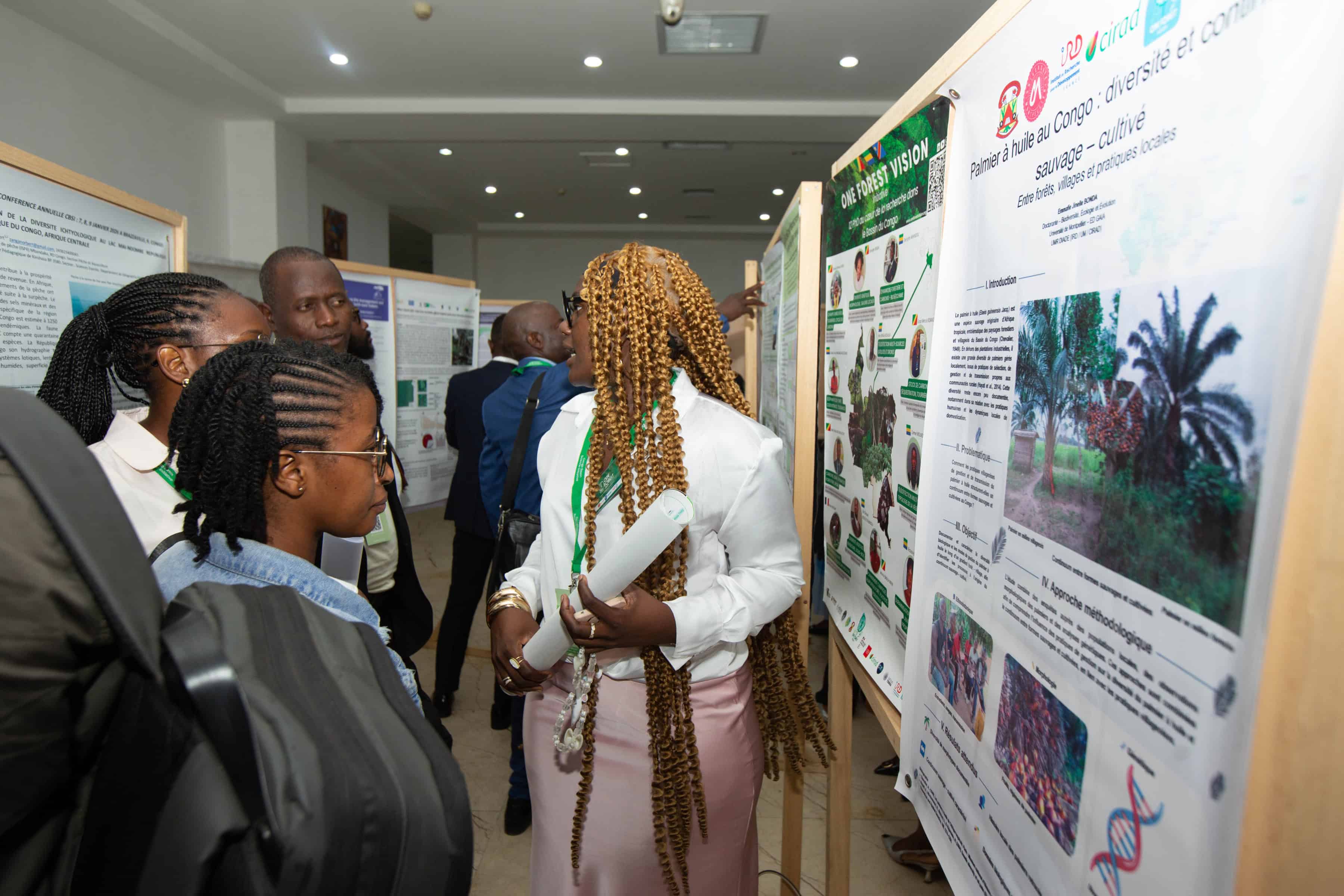
From carbon fluxes and rainfall dynamics to community forest livelihoods, the breadth of work reflects the growing scientific energy in the region. Early career researchers were at the forefront: master’s and PhD students who are receiving CBSI scholarships presented their planned studies and received valuable feedback to strengthen their methodologies before embarking on their research.
Strengthening Representation and Influence
Beyond research, the conference tackled major structural issues affecting Central African science.
Discussions focused on:
- Increasing representation of Central African scientists in the IPCC, where their insights remain critically underrepresented.
- Responding collectively to the Belém Call to Action, a global appeal for stronger scientific collaboration and investment in protecting the forests and peatlands of the Congo Basin while enabling sustainable development.
- Addressing the region’s brain drain crisis, with an agreement to try to secure new funding to create postdoctoral opportunities – CBSI Future Leaders Fellowships – so young scientists can continue their careers within Central Africa.
A Vision Becoming Reality
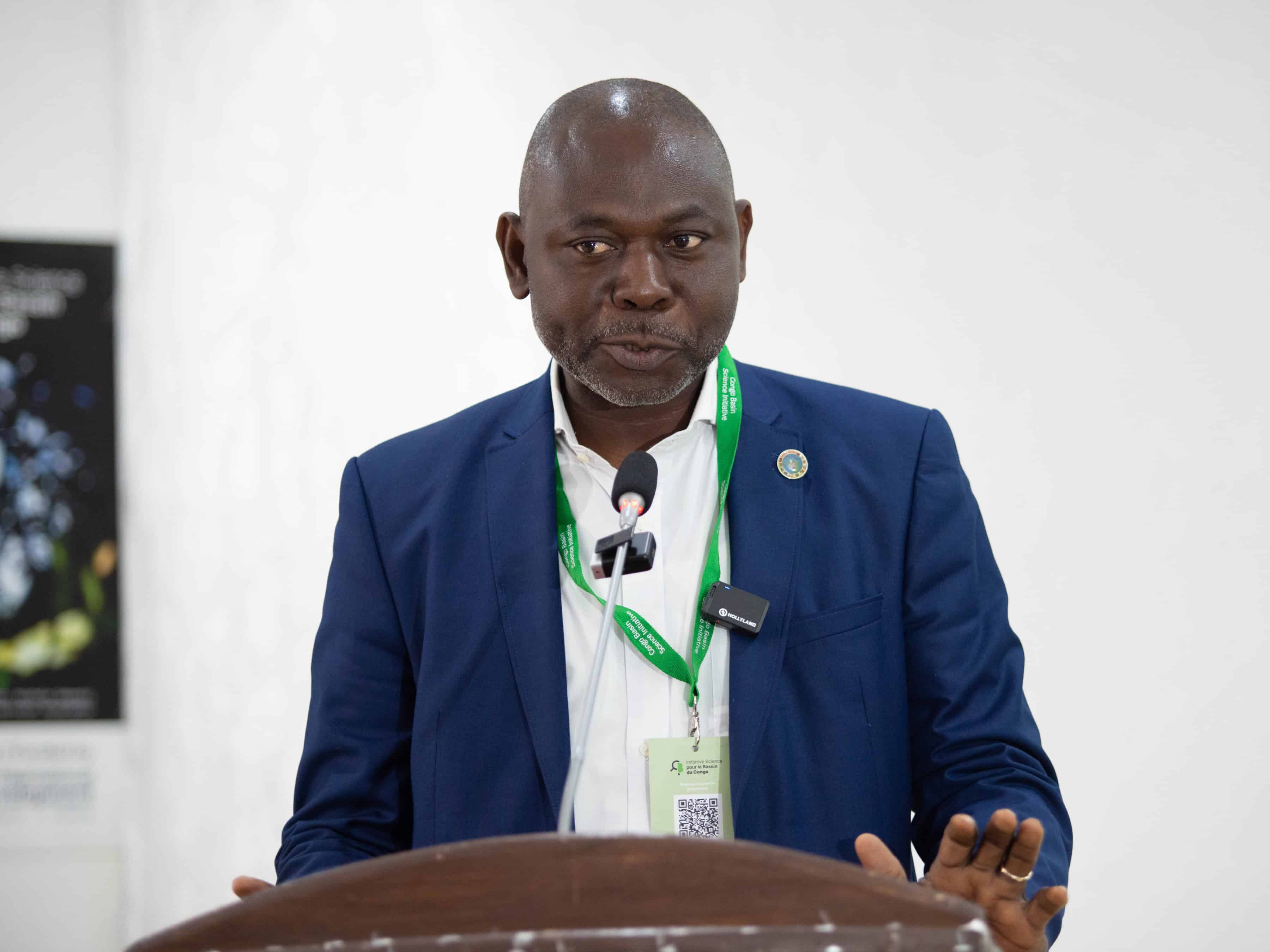
The atmosphere throughout the conference echoed a shared achievement: CBSI’s vision of an open, inclusive, African‑led scientific community is no longer an aspiration—it is taking shape.
One goal of the conference was to ensure scientists from different parts of the vast Congo Basin region can collaborate with going through Europe. Collaborations emerged not just across countries but also across disciplines, institutions, and generations.
The plan to launch the Observatories, to collate and collect distributed data across the Congo Basin region to better understand the climate-water-forest-society system because a reality, with strong enthusiasm from regional scientists for the Observatories.
The conference concluded with remarks from regional and international partners on turning science into impact, including Dr. Emmanuel Tsadok Mihaha, the DRC focal point for CBFP; Mr. Euan McCarthy, the UK Government’s Regional Adviser for the Congo Basin; Dr. Emma Torres, Vice‑President of the Sustainable Solutions Development Network; and Professor Jean Joel Loumeto from Université Marien Ngouabi.
Looking Ahead
The conference successfully brought to life the CBSI’s vision of an open, inclusive, and region‑led scientific community. Engagement from researchers—both early‑career and established—was exceptional, with strong participation from across Central Africa.
Looking ahead, CBSI plans to hold its second annual conference in 2027 in Cameroon, continuing to build a strong, interconnected scientific community across the Congo Basin.