In an effort to increase the participation and visibility of female early‑career researchers from the Congo Basin region during the first annual conference of the Congo Basin Science Initiative (CBSI), we launched six competitive travel bursaries, one for each of our observatories. The bursary covered the plane ticket to and from the conference, as well as accommodation and meals during the conference. The eligibility criteria were simple yet powerful: You must be a female scientist currently pursuing your PhD.
The remarkable interest and the high volume of qualitative applications demonstrated both the need for such opportunities and the strength of scientific research led by women across the region.
This article presents the six awardees and the work they showcased.
Léa Rosine DJOUSSI NDE (Cameroon)
University of Ngaoundéré
PhD Project: Effects of land-use change on soil biodiversity and agroecological resilience in Sudano‑Sahelian Cameroon
Observatory: Land Cover & Land Use Change
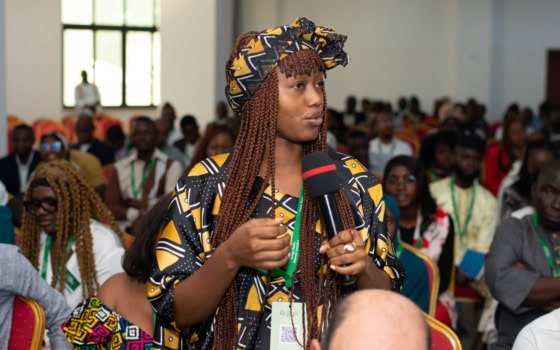
As a soil ecologist, Léa Rosine studies how land‑use changes influence soil biodiversity, ecosystem functioning, and the resilience of agroecosystems in Sudano‑Sahelian landscapes.
She explains:
“Participating in CBSI is a major opportunity for my scientific career. My research explores how land-use change, deforestation, and climate variability affect ecological integrity and rural livelihoods in the Congo Basin region.”
Her work is essential for addressing land degradation, improving sustainable land management, and protecting ecological resilience in vulnerable regions.
You can watch her Vlog here.
Aicha Gomeh-Djame (Cameroon)
University of Yaoundé I
PhD Project: Bats as indicators of environmental change: exploring undocumented diversity in Northwestern Congolian lowland forests
Observatory: Biodiversity
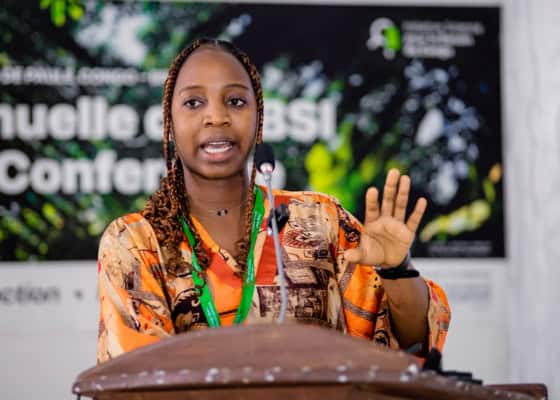
Aicha’s research focuses on bat diversity along disturbance gradients in the Lobéké National Park. Through extensive fieldwork, she has:
- described two species new to science,
- collected data on three Data Deficient species,
- confirmed a new national record for Cameroon.
She stresses the urgency of this work:
“Because bats are sensitive indicators of environmental change, understanding their responses to disturbance is crucial for conservation planning in the Congo Basin.”
Her findings will support more resilient protected‑area management strategies in a region where nearly 30% of intact forest may be lost by 2030.
More information about Aicha’s work can be found on her website.
You can also read her latest article « Une chauve-souris peut consommer les deux tiers de son poids en insectes, chaque nuit » here.
Audrey Flora ATOBA TONKEU (Cameroon)
University of Yaoundé I – CRECC / IRGM
PhD Project: Vulnerability to erosion and prioritization of Nyong sub‑basins using morphometric and topo‑hydrological analysis
Observatory: Hydrology & Freshwater
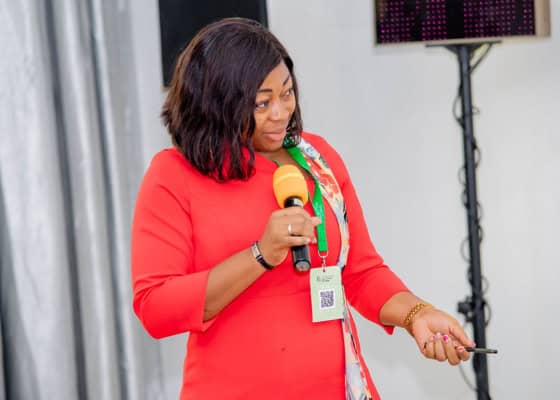
Audrey’s research investigates how hydrological variability and land‑use change shape river channel morphology in forest zones. Combining hydrological datasets, satellite imagery, and geomorphological analyses, her work helps anticipate erosion risks and design strategies for sustainable watercourse management.
“CBSI offers a unique opportunity to strengthen my skills, receive expert feedback, and build collaborations with other early‑career scientists working on hydrological challenges in the Congo Basin.”
Audrey’s latest article “Erosion susceptibility assessment through morphometric analysis and sub-watershed prioritization in the nyong watershed, Southern Cameroon” can be accessed here.
Stella Songwe Tikeng (Cameroon)
University of Yaoundé I
PhD Project: Drivers of evapotranspiration in Central Africa: seasonality and interactions with soil moisture and solar radiation
Observatory: Climate & Meteorology

Stella investigates one of the most critical and least understood components of the Central African climate system: evapotranspiration. Her work improves understanding of water‑energy exchanges, weather patterns, and climate resilience in the Congo Basin—one of the world’s most important carbon and hydrological systems.
“The CBSI’s first annual conference offers me the rare opportunity to exchange ideas with specialists in climate change and hydrology on this topic, which lies at the intersection of the two fields. Indeed, our research indicates that biophysical factors such as high cloudiness and evergreen forests significantly impact the contribution of soil moisture and solar radiation to changes in evapotranspiration in Central Africa’s very wet area. The role of plant transpiration as the main pathway of this interaction suggests that changes in land use (deforestation) could have a dramatic effect on the complex climate of this region.”
Stella’s latest article “Drivers of evapotranspiration in Central Africa: investigating seasonality and change in interactions with soil moisture, and solar radiation” can be accessed here.
Orlane Messa Kamsi (Cameroon)
University of Dschang
PhD Project: Contribution of natural regeneration to ecosystem service provision in restoration landscapes of humid savannas in Cameroon
Observatory: Vegetation, Soil & Biogeochemistry
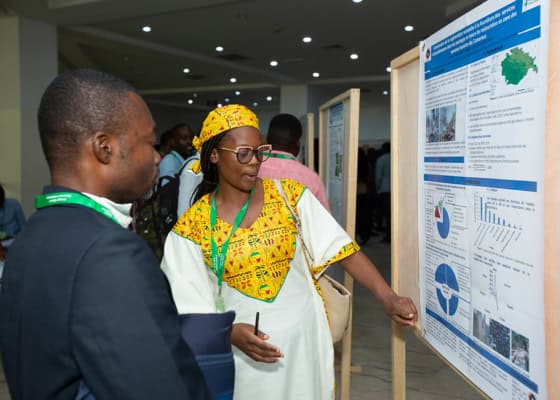
Orlane studies how naturally regenerating vegetation contributes to ecosystem restoration in humid savanna landscapes.
“Presenting at CBSI will strengthen my scientific visibility, improve my research through constructive feedback, and reinforce my commitment to biodiversity conservation and environmental science.”
Her work supports restoration planning and sustainable land‑use policies.
Please have a look at her poster for more information.
Emeline Narcéla BIFANE EKOMI (Gabon)
University Omar Bongo
PhD Project: Consultation of Indigenous Peoples and Local Communities in protected areas of Gabon: inclusive governance and implementation of FPIC
Observatory: Socio‑ecology
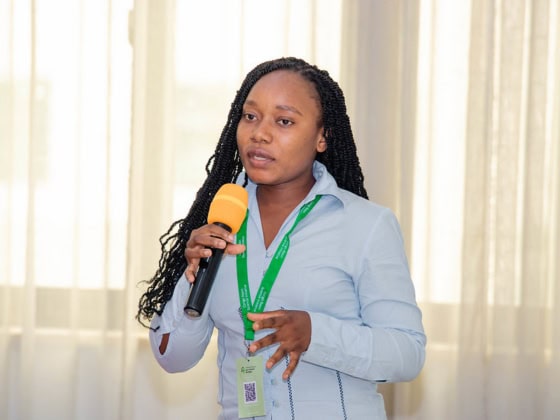
Emeline’s research focuses on inclusive governance, Indigenous rights, and participatory conservation in Gabon’s protected areas.
“The CBSI conference will help refine my recommendations for more inclusive governance, increasing the socio‑ecological impact of my research.”
Her work contributes to national and regional policy discussions on FPIC (Free, Prior, and Informed Consent).
Empowering the next generation of women scientists
These six remarkable researchers illustrate the essential role of women in shaping the future of science, conservation, and sustainable development in the Congo Basin. Their work spans climates, forests, soils, hydrology, biodiversity, and socio‑ecology—demonstrating the power of interdisciplinary perspectives and the necessity of women’s voices in science.
CBSI is proud to support them and excited to follow their continued contributions to the region’s scientific and ecological future.